Biografia di padre David Maria Turoldo
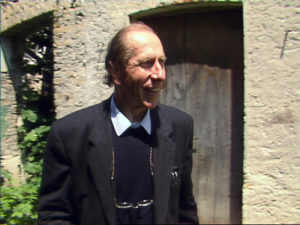
 Padre David è nato in Friuli, a Coderno di Sedegliano in provincia di Udine, nono figlio di una povera famiglia di contadini, il 22 novembre 1916. Frate e sacerdote nell’Ordine dei Servi di Maria, visse presso il Convento di San Carlo al Corso in Milano gli anni della Resistenza e della ricostruzione civile. In quel contesto diede vita alla “Messa della Carità” e insieme all’amico e confratello Camillo de Piaz al centro culturale “Corsia dei Servi”.
Conosce anche l’allontanamento da Milano a causa delle sue posizioni di apertura, e l’esilio. Rientrato in Italia fu di comunità in vari conventi tra cui Firenze e Udine, presso la Madonna delle Grazie, dove scrisse sceneggiò e produsse il film “Gli ultimi” con la regia di Vito Pandolfi. Dal 1963 si trasferì a Fontanella, frazione di Sotto il Monte, ridando vita all’antica Abbazia di Sant’Egidio e al centro culturale ed ecumenico Casa di Emmaus.
Ancora oggi molti sono i visitatori e i frequentatori che salgono per attingere alla sua forte eredità spirituale e culturale. Sulla sua scia una comunità di frati Servi di Maria mantiene viva la presenza e le intuizioni.
Nel piccolo cimitero locale egli riposa sotto una semplice croce lignea, dopo la morte avvenuta a Milano il 6 Febbraio 1992.
Scrittore, poeta, saggista, conferenziere, interviene nella vita culturale, sociale e religiosa del paese, con libri, articoli, interviste e seguitissimi interventi su radio e televisione, coinvolgente per la sua irruenza profetica e la visione esigente e alta dell’uomo, della società e della chiesa.
 Father David Maria Turoldo was born in the little village of Coderno, in Friuli, in the North East of Italy, on the 22nd of Novembar 1916. He was the last of nine brothers in a rural family. He used to repeat in the poorest family of the village. He attended the seminary first in Udine then in Vicenza in the convent of the Fathers Servites. In 1935 he professed his vows with the name of David Maria; at the register office his name was Giuseppe.
At first he was assigned at his congregation in San Carlo al Corso in Milan. He took part in the Italian Resistance promoting connections among the Partisan groups. In the early 1950s he was called in the cathedral of Milan to preach for the Sunday Mass; archbishop at that time was Cardinal Schuster. His preaches became very popular because of his thundering voice and the faith contents, preaching poverty against the emptiness of richness, disturbing so much the upper class society of Milan.
His partecipation in the Nomadelfia experience, a sort of community living on their work in a farm, sharing among them any necessity caused intervention both by the political parties and by the superiors of his congregation. The result was that father David Maria was forced to move far from Italy. He travelled among the Friulian emigrants in USA, Canada, United Kingdom, South Africa, Argentina. He used to say “I had to flee away to break other peaces”.He returned in 1960 when he was assigned at the Servite Congregation in Udine. He then wanted to devote himself to an old project: he wanted to make a film that in his thought aimed to rapresent the life of a peasant family in Friuli in the 1930s. The project resulted in a failure in the economic field and in the not favourable acceptation of the film criticism press.
Disappointed, he made a request to retire in the S.Egidio Abbey in Sotto il Monte (Bergamo) the birth village of Pope John XXIII. Helped by his friends in Milan of the first years of his ministery he restored the abbey and made it an Ecumenical cultural Center. At the end of the 1980s he fell ill and on the 6th of February 1992 he died of a cancer in Milan. Father David Maria Turoldo had been a man, a friar, a poet and a prophet. He used to say: I’ve come to disturb the consciences and criticizing the compromission between the political power and the Church he created so many enemies both in the civil political world and also in the Vatican Church. Only shortly before dying he received the excuses from the Church in the words of Cardinal Maria Martini: “Father David we were wrong: we didn’t understand you”. He was a poet: he wrote thousads of verses following the psalm patters of the Old Testament; his poetry was dry and strong as a stone. In his rimes he asked so may times help to God himself, knocking for the door to be opened, but nobody answered and experimented the unbearable silence of God. He suffered so many nights in the cold, solitary cell in S. Egidio Abbey. He was the chanter of the earth: his path was from poverty to poetry, from poetry to truth.
He was a prophet: in his preaches, articles, conferences he antecipated the “empty seduction of nothingness that invaded the consumer society”. He was a friar, so faithfull to the Franciscan principles of humility, fraternity and poverty. The Servite is a Franciscan Order created by seven founders in the 13the century: the Ordo Servitium Virginis Mariae. Their rule is penitence, poverty, prayer. Even if not fully understood by the Friulians themselves, he was a son of his birth village. The first years spents in his childhood had been well rooted in his heart and the image of his ancient mother accompanied father David Maria all his life along. He had been one of the most important innovative, original voices in the Italian Church and in the civil debate in the second half of the XX century. He used to say: there is, beyond the usual Beatitudes, another one: Blessed are those who hunger and thirst for rebellion. It is hard to resume and count what and how much has been written about the Servite Father David Maria Turoldo, owing to the strong print he has left in the cultural and spiritual aspects in the last century. The bibliography about his books and about the so many who have written about him is imposing. The announcement of his death was on the first pages af all Italian newspapers; they mainly mourned father David Maria Turoldo as the last prophet, the poet of God, a witness of our times, a restless friar, the poet of peace, the voice of Friuli, his birthland.